How to Start Playing American Football: A Guide for Beginners
How do you start playing American football when the sport seems unfamiliar and complicated? In 2028 flag football will join the programme of the Los Angeles Olympic Games, so this is a good time to take an interest in the game. In our guide, we describe several ways to get started, from the non-contact version to regular training at a club. We also cover your first session, kit and safety in American football. Arrangements vary between clubs, so check the details directly with the club.
What is flag football, and why is it a good start?
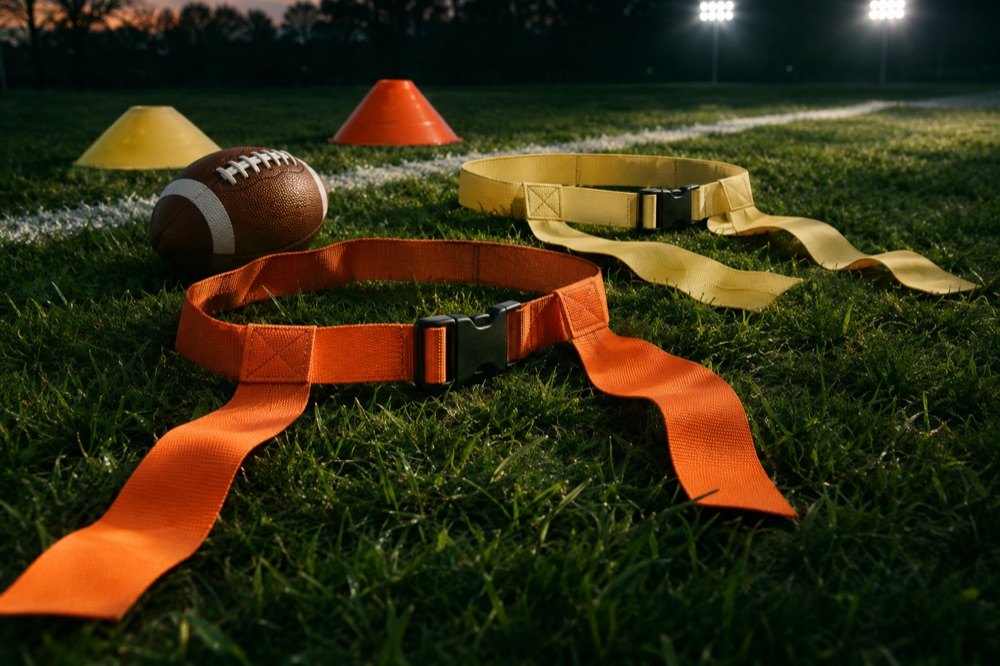
Flag football is a version of the game without tackles or blocks. Instead of bringing down an opponent, a player pulls a flag from their belt. For someone new to the sport, it offers a gentler introduction to the rules, allowing you to focus on passing, positioning and tactics rather than physical contact. Starting this way lets you get used to the field and the terminology before deciding whether to try the full-contact game.
Flag football also has a growing profile. Alongside its Olympic prospects, the GB Lions have national flag football teams too. For many people, this shows that flag football is a sport in its own right, with its own opportunities to progress, rather than simply an add-on to the traditional game. This makes it a worthwhile starting point if you are unsure about physical contact.
How do you start playing American football at a club or university?
The simplest way to get started is to attend an open training session. Many clubs in the UK hold these sessions for new players, but you should check dates and requirements directly with the club. It is worth emailing or calling in advance to ask about a beginners' group and whether you can attend without signing up first. This helps you avoid surprises on the day.
Students have an extra option. Universities have their own teams in the BUAFL, offering students a natural route into the sport. Meanwhile, most players at adult BAFA clubs are amateurs, so you do not need to have played when you were younger to find a place on a team. Beginners should not feel out of place at these clubs.
The first session: what to bring and what to expect
For your first session, comfortable sports clothes, water and boots or running shoes are enough. Clubs often lend helmets and pads, so there is no need to invest in a full set straight away. Before buying anything, it is worth asking the coach what you will need in the coming weeks. The first session is also a good chance to ask questions and see how the team works.
You need not worry about your build either. Positions on the field call for very different qualities, such as speed, strength, agility or accuracy. The game therefore has room for both smaller, quicker players and those who rely on strength. Nobody needs to know which position they will play at their first session.
Why is it worth starting to play American football?
First, the sport offers a variety of positions. Each calls for different qualities, so every player can find a role that suits their strengths, whether speed, strength, agility or accuracy. American football is a team sport, with every player responsible for playing their part.
Second, there is a clear route for students. University teams in the BUAFL let you start playing American football in a setting that is already part of student life. Third, most players at adult BAFA clubs are amateurs, so beginners join an environment where passion matters more than a professional contract.
Fourth, flag football offers a way in for people who prefer to start without physical contact. Its Olympic prospects for 2028 and the GB Lions national teams show that this version has a promising future. These different routes make American football accessible to more than just a select few.
Safety in American football: what to keep in mind
American football is a contact sport, so start by getting a doctor's approval and having an honest conversation with the coach about your health. It is worth mentioning past injuries and health conditions, even if they seem minor. The coach can then choose suitable exercises to start with and monitor how you respond to the physical demands. We encourage you to have this conversation before your first contact session.
A warm-up, shoulder and neck mobility work and practice in falling safely reduce the risk of injury. Treat these as integral parts of training, rather than extras before the game itself. A warm-up prepares the body for exercise, shoulder and neck mobility work focuses on areas under particular strain in a contact sport, and falling technique teaches you how to land more safely. Safe habits develop step by step from the first session, while flag football lets you practise many elements of the game without tackles or blocks.
Where to start today?
Begin by choosing the version that suits you best: non-contact flag football or the traditional game at a club or university. Then contact your chosen team, arrange to attend an open session and book a doctor's appointment. Ask a club in your area about a beginners' group. You will then have a clear first step towards playing American football.